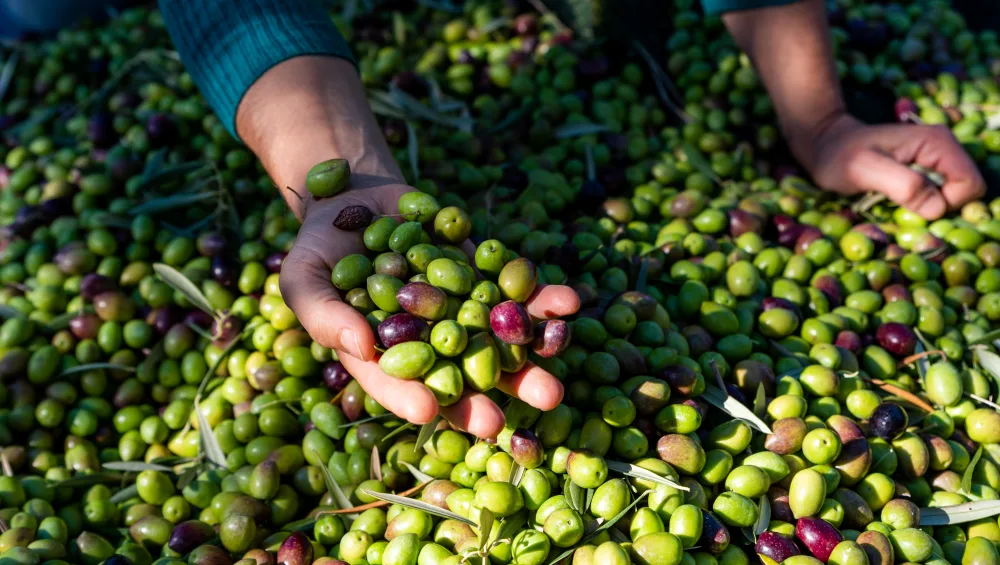
The quality of olive oil does not depend solely on the olive variety or the pressing method. True quality often begins with choosing the right harvest time. As the olive ripens on the tree, the amount of oil inside and the balance of phenolic compounds constantly change. For this reason, “harvest timing” is not just an agricultural decision—it is the most critical stage that determines the chemical, sensory, and aromatic profile of the oil.
When Are Olives Harvested?
Olive harvest generally takes place between late October and mid-December. However, this calendar varies by region and year. In inland parts of the Aegean, such as Aydın, where the climate is mild but humidity balance is high, early harvest usually begins in mid-October. At NizOlive, this period is regarded as the “green maturity” phase—the time when the olives are still green but oil formation inside has begun.
What Is Early Harvest?
Early harvest means picking olives while they are still green, before full ripeness. Oil yield is low during this period, yet the polyphenol level is at its peak. Polyphenols are the natural compounds that determine the antioxidant capacity of olive oil. Consequently, early-harvest olive oils stand out with intense fruitiness, pronounced bitterness, and longer shelf life. Scientifically, oils produced during the early harvest period contain on average 25% more antioxidants than late-harvest oils.
What Happens If the Harvest Is Late?
Late harvest (late November–December) is carried out when the olives have turned completely black. At this stage, juice content decreases while oil content increases; however, phenolic compounds decline. The resulting oil is softer, less pungent, and aromatically milder. These oils are generally preferred for cooking, whereas early-harvest oils are favored for table use and gourmet applications.
Harvest Method Is Equally Important
The method is just as crucial as the timing. Hand-picking prevents damage to the fruit and keeps the acidity of the oil low. In mechanical shaking methods, if olives are bruised, oxidation begins and oil quality can suffer. NizOlive has standardized hand-harvesting or the use of low-vibration systems, followed by pressing within a maximum of 4 hours.
Conclusion
Olive harvest is not merely a date on the calendar; it is the result of a decision and years of experience. Harvesting at the right moment defines the entire chemistry of the olive oil: its aroma, durability, and natural character. For NizOlive, this process is not about “acting early,” but about “catching the exact right moment.” Because the second an olive is picked from the branch is, in fact, the moment the character of the oil is born.