Olive oil is not just a food product; it is an aromatic whole that directly reflects the chemistry of nature. That’s why understanding a “good olive oil” is like deciphering the story of the olive. Although tasting is a field that requires professional expertise, learning the basic differences allows everyone to select quality in their own kitchen. So, how do we recognize a good olive oil?
1. Color Is a Clue to Character, Not Quality
Most people evaluate olive oil by its color, but this alone is not sufficient. Shades of green, gold, or yellow vary depending on the ripeness of the olives and the variety. Early harvest oils are usually intensely green, while late harvest oils are lighter and more golden. Therefore, color is only an indicator of character—it does not determine quality.
2. Aroma: The First Impression Tells Everything
A high-quality olive oil has a lively and clean scent, just like fresh fruit.In this initial evaluation with the nose,
if you detect the following aromas, you’re on the right track:
- Freshly cut grass
- Green apple or tomato leaf
- Artichoke, almond, or olive leaf
If scents like “rancid nuts,” “damp cloth,” or “vinegar” are present, the oil may be oxidized or spoiled. Such aromas result from delays in processing the olives during production or storage errors.
3. Taste: Seek the Triple Balance
In professional olive oil tastings, three fundamental elements are evaluated: fruitiness, bitterness, and pungency.
A good oil is one where these three are in balance.
- Fruitiness: The sweet and fresh sensation that reflects the naturalness of the olive.
- Bitterness: An indicator of polyphenol richness.
- Pungency: A slight tingling in the throat; a sign of antioxidant strength.
If these three characteristics are present in an oil and none overpowers the others, you have a balanced extra virgin olive oil.
4. Texture and Persistence
A quality olive oil leaves a slippery but not heavy feeling in the mouth. If a pleasant almond-like persistence remains at the back of the tongue after the taste fades, this indicates that the oil is fresh and rich in phenolics. Metallic or soapy tastes, on the other hand, are typical signs of spoiled oil.
5. Small Details to Note During Tasting
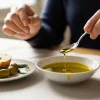
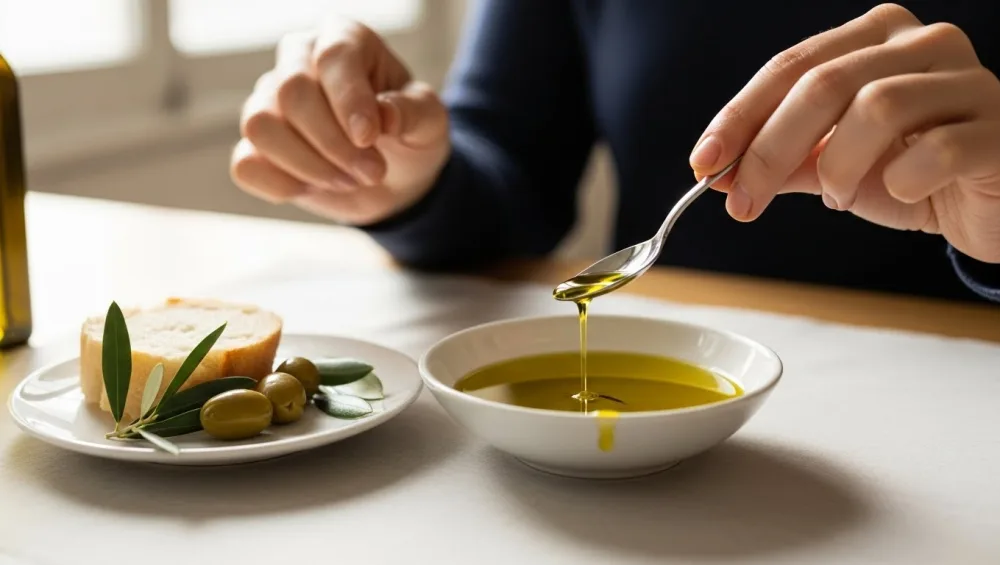
Professionals conduct tastings in small blue glasses so that color perception does not influence the result. Aromas become more pronounced when the oil warms up; therefore, warming it slightly in the palm of the hand is a correct method. When tasting at home, using a glass cup instead of a metal spoon helps keep the aroma pure.
Conclusion
Understanding a good olive oil is actually reading the producer’s labor. Freshness, polyphenol balance, the right harvest timing, and a clean processing method—all are hidden in this taste. NizOlive works to make this experience felt not only in production but in every bottle. Because olive oil, when produced correctly, is not just a flavor; it is the direct expression of the Aegean.