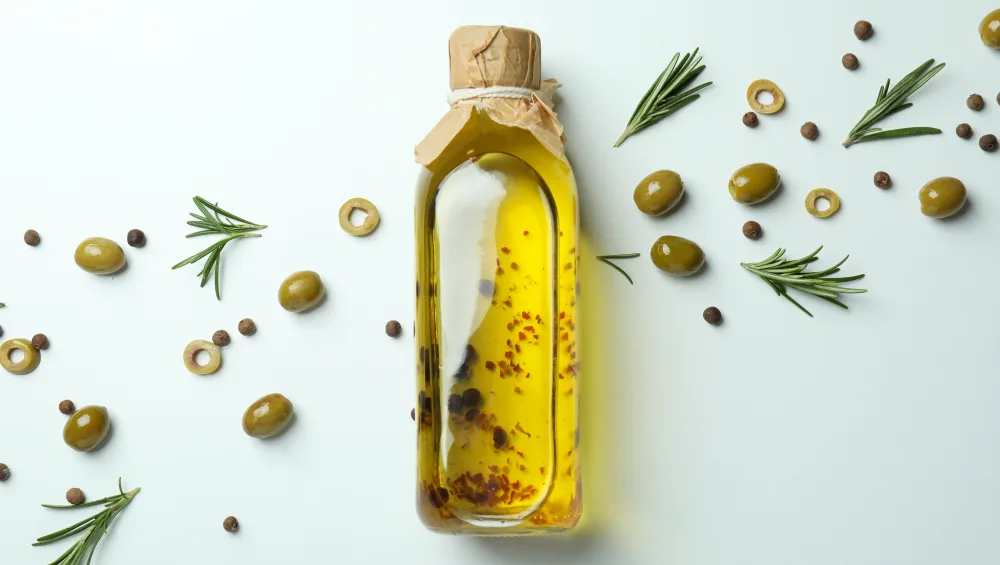
Olive oil retains its value not only when produced correctly but also when stored properly. Because olive oil is a living product it changes over time, breathes, and reacts to light and temperature. Therefore, the biggest mistake after purchasing a good olive oil is storing it under the wrong conditions. Producers like NizOlive meticulously manage every stage from pressing to packaging; however, quality must also be preserved on the consumer side.
So, what are the most common mistakes when storing olive oil?
1. Storing It in Light
The greatest enemy of olive oil is sunlight.
When exposed to direct light, the chlorophyll in the oil oxidizes, causing color changes and deterioration of the flavor profile.
This process leads to the oil developing a rancid, bitter taste.
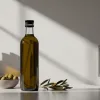
That is why olive oil bottles should always be dark-colored glass and kept in a place away from sunlight.
The reason NizOlive prefers dark green glass packaging is precisely this: to strengthen the oil’s natural protective shield.
2. Keeping It at High Temperatures
Olive oil is sensitive to heat.
Temperatures above 25°C alter the oil’s chemical structure.
Storing it in the kitchen next to the stove or oven causes the olive oil to age prematurely.
The ideal storage temperature is between 18–22°C.
Therefore, the best place is a cool, dark cupboard—but not the refrigerator.
3. Keeping It in the Refrigerator
Many people prefer to store it in the refrigerator to preserve freshness; yet this is a common misconception.
At low temperatures, olive oil crystallizes, thickens, and takes on a cloudy appearance.
Although this physical change is temporary, repeated exposure can permanently disrupt the oil’s balance.
Olive oil should be stored at room temperature, in a tightly sealed container, and in a cupboard away from light.
4. Allowing It to Come into Contact with Air
Contact with oxygen accelerates oxidation in olive oil.
A bottle cap that does not close properly or metal-capped bottles left open for long periods initiate the spoilage process.
For this reason, it must be kept in glass or stainless steel containers with tightly sealed lids.
The special cap system used in NizOlive packaging is designed precisely to eliminate this risk.
5. Keeping It in Plastic Bottles for a Long Time
Plastic containers interact chemically with the oil over the long term.
This can lead to undesirable consequences for both taste and health.
Olive oil must always be stored in glass or stainless steel bottles.
If the purchased oil is in plastic packaging, it is recommended to transfer it to a glass container as soon as possible.
Conclusion
When stored correctly, olive oil preserves its natural qualities for years; under wrong conditions, it can lose its value in just a few months. NizOlive’s production philosophy is not just about pressing olives but about protecting the oil’s entire life cycle. That is why a bottle of NizOlive lives not on shelves but under the right conditions. Because olive oil endures not when cared for but when respected.